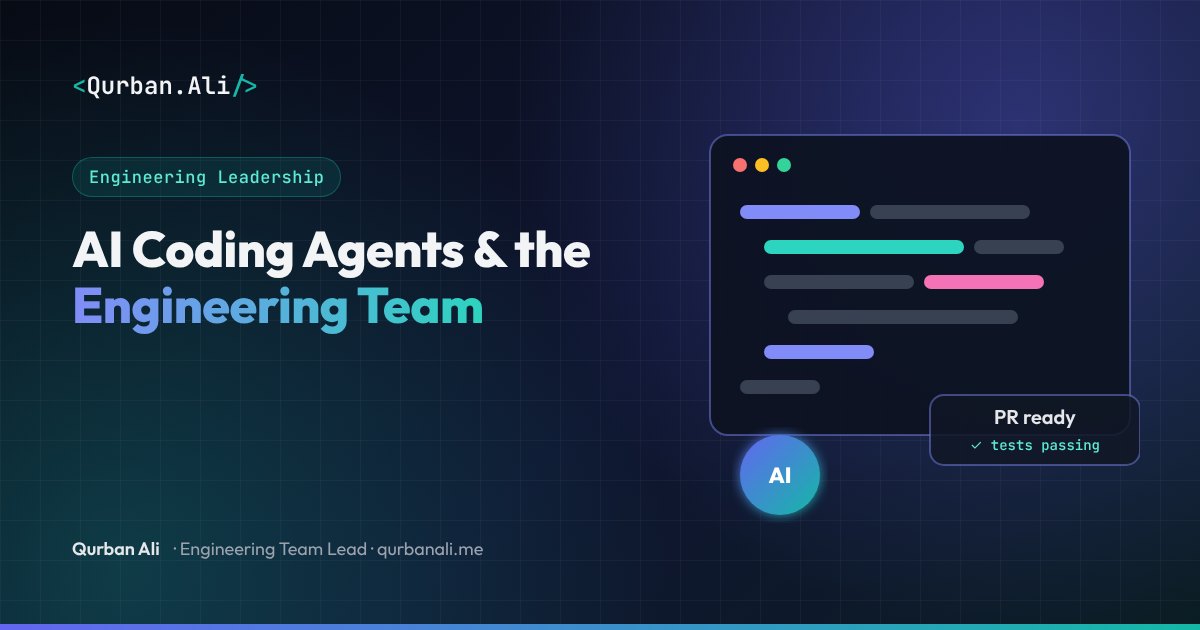
AI coding tools have moved quickly from autocomplete to coding agents that can read a codebase, plan a change across multiple files, run tests and open a pull request. For engineering leads, the question is no longer whether the team uses AI, but how to use it without lowering quality.
Here's what I've seen change — and what shouldn't change at all.
What's genuinely different
1. The cost of a first draft has collapsed. Boilerplate, CRUD endpoints, test scaffolding, migrations and refactors that took hours can be drafted in minutes. That changes estimates and frees time for harder problems.
2. Reading code matters more than writing it. When a large part of the code is drafted by an AI, the critical skill becomes reviewing: spotting a subtle security issue, a missing edge case or an abstraction that will hurt in six months.
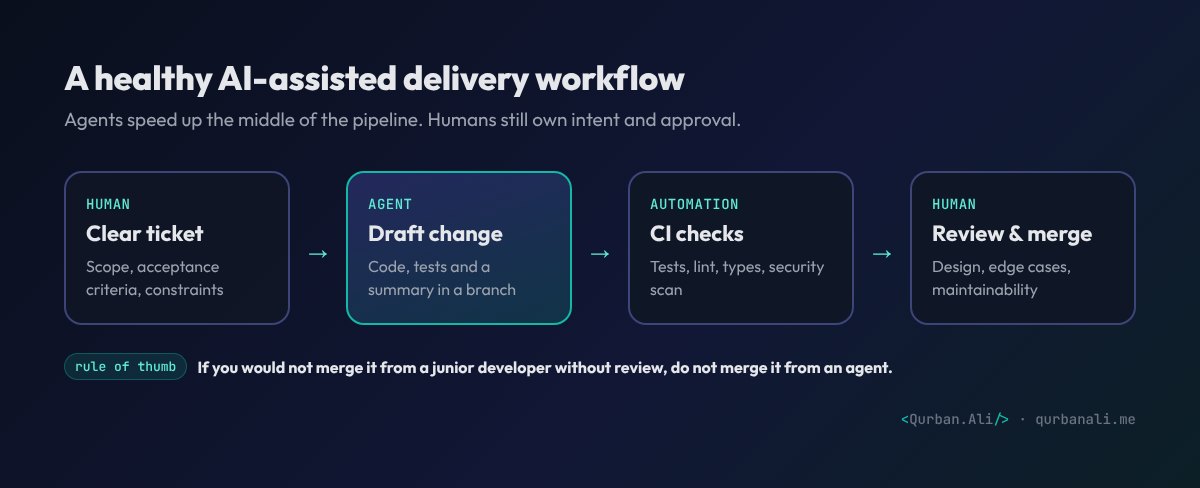
3. Clear specifications pay off more than ever. Agents do what you ask, not what you meant. Teams that write precise tickets — scope, acceptance criteria, constraints, examples — get dramatically better results.
4. Tests become the safety net. A good test suite is what lets you accept AI-generated changes with confidence. Weak test coverage turns AI speed into AI risk.
What doesn't change
- Ownership. The engineer who merges the code owns it — regardless of who or what typed it.
- Architecture and design. Agents work best inside a well-structured codebase; they don't decide your system boundaries.
- Understanding the business. Knowing why a feature exists is still the job of the team.
A practical playbook for leads
Set clear team guidelines. Decide where AI use is encouraged (tests, boilerplate, refactors, documentation), where it needs extra care (security, payments, data migrations) and what must never be pasted into external tools (secrets, customer data).
Keep pull requests small. It's tempting to let an agent produce a 2,000-line change. Don't. Small PRs remain reviewable, whoever wrote them.
Invest in the codebase's "AI-readability". Consistent patterns, good naming, a short architecture document and a contributing guide help agents and new hires alike. Many tools also read a project instruction file — keep one up to date with conventions and commands.
Strengthen CI. Linting, type checking, tests and security scanning on every PR are the cheapest quality gate you have.
Protect learning for junior developers. Juniors still need to understand the code they ship. Pair them on reviews, ask them to explain AI-generated changes, and give them problems where they build the mental model themselves.
Measure outcomes, not lines of code. Track lead time, change failure rate, time to restore and review turnaround — not how much code was generated.
Common pitfalls
- Rubber-stamp reviews because "the AI wrote it and tests pass".
- Inconsistent patterns as different people prompt in different styles.
- Hidden security issues — outdated dependencies, missing authorisation checks, unsafe input handling.
- Skill erosion when nobody on the team deeply understands a critical module any more.
The bottom line
AI coding agents are a real productivity multiplier — for teams with strong engineering foundations. Clear specs, small PRs, solid tests and thoughtful review turn AI speed into delivery speed. Without them, you just ship problems faster.
Leading a team through AI adoption, or looking for an engineering lead who has done it? Let's talk.